_edited.jpg)
The Nine Hungers: What Are You Really Hungry For?

The Nine Hungers: What Are You Really Hungry For?
Why are you hungry?
And what are you really hungry for?
At first glance, that might sound obvious. “Food, obviously. Maybe a BLT. Or pizza.” But hunger isn’t always that simple. In reality, there are nine types of hunger — and understanding them can completely change how you relate to food.
As athletes, we’re good at tracking data — heart rate, wattage, macros, training volume. But most of us lose touch with the subjective side of eating: how food looks, smells, feels, and satisfies us. Developing awareness around hunger and fullness isn't woo-woo; it's an antidote to the daily inundation of diet culture and food industry marketing that pushes and pulls your dietary behaviors. The more fluent you are in your body’s language, the better you can safeguard yourself from the mental burden and second-guessing imposed on you
throughout the day.
The Nine Hungers
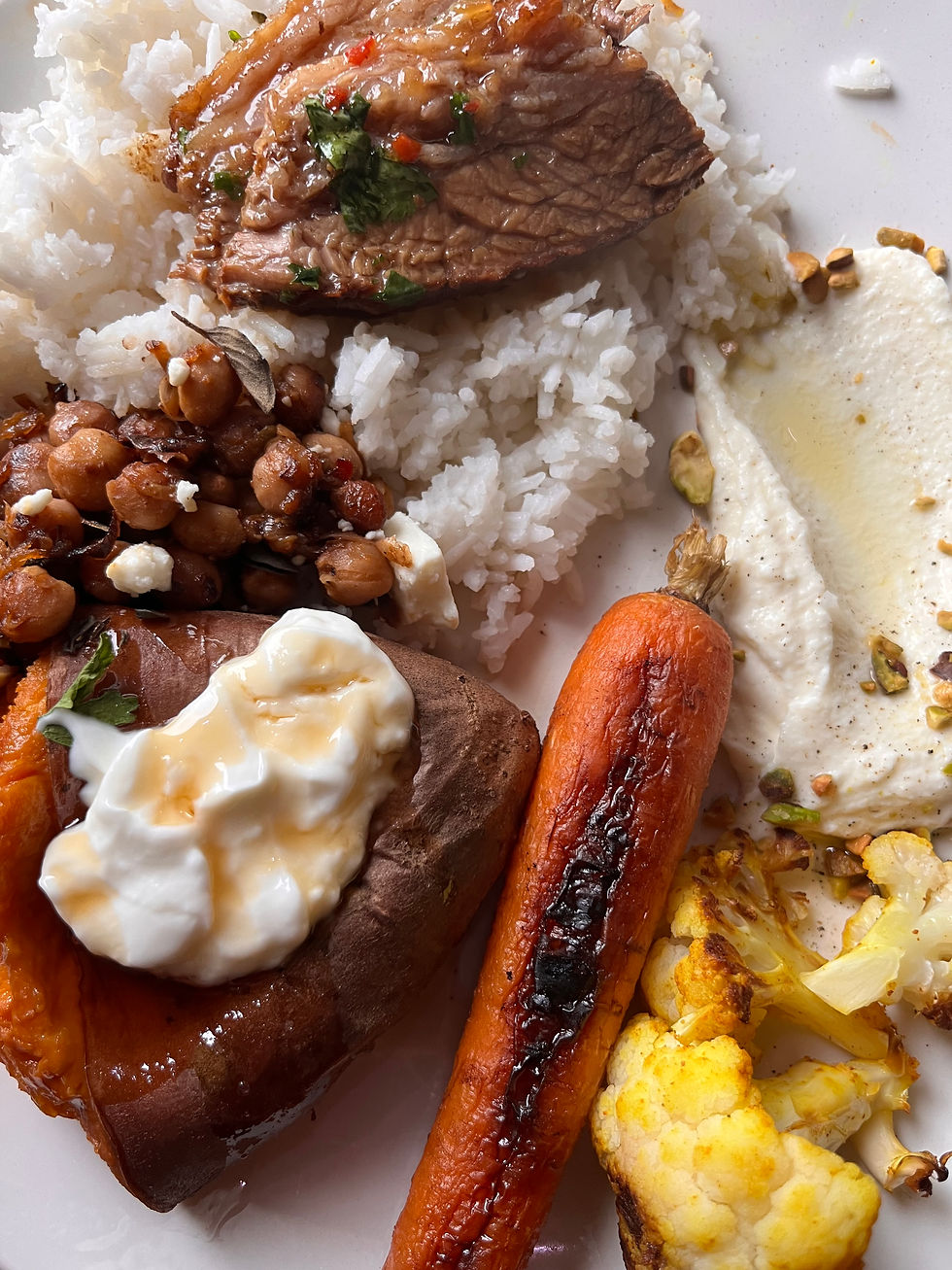
Eye Hunger - When food looks good, we want it. Bright colors, perfect plating, or even a well-timed Instagram post can trigger desire long before we’re physically hungry. Example: Seeing another table's fajita order coming by at a restaurant. Tell me you're not thinking, "Oh I know what I'm getting now," every time you see that come by.
Nose Hunger - Smell is one of the most powerful drivers of appetite. The scent of food can spark cravings or memories instantly.
Example: Smelling popcorn at the movies and suddenly wanting some, even after dinner.
Mouth Hunger - This one’s about taste and texture — crunchy, creamy, salty, sweet. It’s about textural satisfaction, not fueling or hunger.
Example: Grabbing chips just because you want something crunchy while watching TV. The Japanese actually have a word for this, kuchisabishii, which literally means "lonely mouth."
Stomach HungerTrue physical hunger — that empty, growling feeling that builds over time and resolves with balanced eating.
Example: Feeling your stomach rumble mid-morning and realizing you need a snack.
Cellular Hunger - A deeper, intuitive hunger — your body’s request for something specific, like nutrients or hydration.
Example: Craving salty snacks or carbohydrates after a long, sweaty ride — your body’s asking for sodium, fluids, and carbs.
Mind Hunger - The “shoulds” and “shouldn’ts.” The calorie math. The diet rules. Mind hunger is driven by thoughts, not signals. Often influenced by diet culture and food noise.
Example: Picking a salad over pasta because it feels like the “right” choice not the satisfying one, or because we heard carbs are "bad."
Heart Hunger - Emotional hunger. Eating for comfort, connection, or to soothe stress.
Example: Turning to ice cream after a rough day because it feels good — at least for a moment.
Ear Hunger - Triggered by sound — sizzling bacon, clinking plates, people talking about food.
Example: Hearing someone open a bag of chips and suddenly wanting a snack. Also I'd like to mention fajitas again. :)
Touch Hunger - The physical pleasure of eating — texture, warmth, and even how food feels in your hands.
Example: Wrapping your hands around a hot mug of tea when you’re stressed.
The Power of Awareness
Recognizing which hunger is showing up helps you make space between the urge and the action. That space is where mindfulness — and choice — live.
As Viktor Frankl wrote,
“Between stimulus and response there is a space. In that space is our power to choose our response. In our response lies our growth and our freedom.”
Our days are full of small, automatic decisions — eating, working, training, fueling, recovering. Awareness gives you back control of the autopilot and also helps recognize the food noise and mind hunger. Working with a dietitian can help you navigate and contextualize all the dietary "what if's" and nutritional training needs as well to further reduce the mental burden placed on your food choices.
Replace, Don’t Resist
Many people try to “stop” habits with willpower: I just need to stop snacking. I just need to try harder. But force almost always backfires.
What resists, persists.
Instead, notice what the habit is trying to give you — comfort, calm, distraction — and redirect that energy toward something that meets the same need in a more kind, supportive way, and helpful. When we try to control a behavior through force, we create tension within ourselves. The energy behind it doesn’t disappear; it needs a new direction.
So rather than saying, “I’m not going to snack at night,” pause and ask what’s driving the urge. Are you tired? Lonely? Restless? Then respond with intention — make tea, stretch, journal, or just sit with the feeling for a moment.
This isn’t about perfection. It’s about understanding your body’s signals and responding with curiosity and care instead of criticism.
Why It Matters
Mindful eating isn’t about eating less or being “good.” It’s about building awareness — the same skill that helps you pace a climb, manage fatigue, or trust your race plan.
When you can read your body’s signals — truly listen — you unlock a whole new level of autonomy around food and fueling. That’s where performance and well-being start to overlap.
Takeaway: Cultivate awareness first, then respond (not react) with tact, intention, and kindness.
If you want to learn more about how I work with athletes on topics like intuitive and mindful eating, contact me (secondarrownutrition@gmail.com) or apply for coaching and let’s chat.
.


Comments